// BLOG • 2026-10-31
Army Helicopter Slang Explained: From 'The Hook' to 'Brownout'
Spend ten minutes around an Army aviation unit and you'll hear words that aren't in any dictionary. Some are official terms that got shortened, some come from the Vietnam era, and some exist mostly to make fun of the people who do the same job in a different aircraft. Here's a field guide to Army helicopter slang: what each term really means, plus our "what the pilot says vs. what he means" translation.
Names for the aircraft
"The Hook"
Real meaning: The CH-47 Chinook. The nickname is commonly traced to its cargo hooks and its long career hauling sling loads. Crews also have a less polite nickname for it, which rhymes and which you can look up yourself.
What he means: "The Hook" is said with love. The other nickname is also said with love, but louder.
"Huey"
Real meaning: The Bell UH-1 Iroquois. The nickname comes from its original designation, HU-1. It's the helicopter most people picture when they think of Vietnam.
What he means: "Back in my day" usually comes right before "Huey."
"Hawk"
Real meaning: The UH-60 Black Hawk, the Army's utility helicopter since the late 1970s.
What he means: From a Chinook pilot: "the little one."
"Apache" and "Kiowa"
Real meaning: The AH-64 attack helicopter and the OH-58 Kiowa scout, which the Army retired in the 2010s. The Army names most of its helicopters after Native American nations, a tradition the Chinook's own name follows.
What he means: Attack pilots and lift pilots have been roasting each other since before either of them was born.
People and jobs
"PC," "PI," and "IP"
Real meaning: Pilot in command (the pilot responsible for the flight), pilot (the other rated pilot), and instructor pilot. You may also hear "AC," for aircraft commander.
What he means: The IP is the one quietly writing notes while you fly.
"FE" and "Crew chief"
Real meaning: On a Chinook, the flight engineer and crew chiefs are enlisted crew members in the back. They watch the aircraft, the load, the passengers, and the ground, and they talk the pilots through tight spots.
What he means: The person in the back actually knows where every bolt is. The pilots just know where the buttons are.
"Warrant"
Real meaning: A warrant officer. Most Army pilots are warrant officers, technical specialists who often spend their whole career flying.
What he means: "Professional pilot, amateur at everything else, including uniforms."
"Stick buddy"
Real meaning: A flight school classmate you trained alongside, sharing aircraft and instructors.
What he means: The one person who knows about the solo you'd rather forget.
Flying words
"Brownout" and "whiteout"
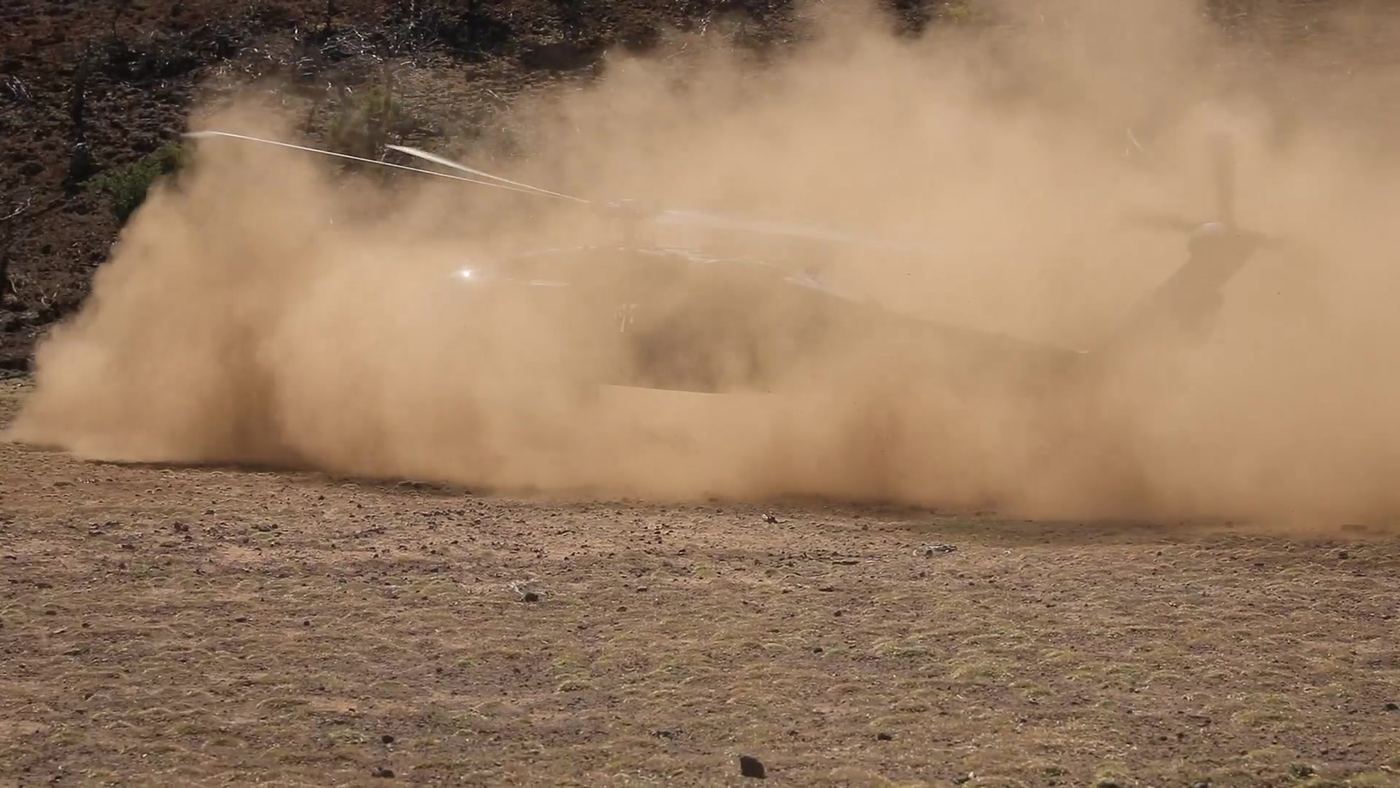
Real meaning: When rotor downwash kicks up so much dust or snow during landing or takeoff that the crew loses sight of the ground. With two large rotors pushing a lot of air down, brownouts are a serious hazard for heavy-lift helicopters, and units train hard for them.
What he means: "We're landing inside a snow globe someone shook."
"NOE"
Real meaning: Nap-of-the-earth: flying as low as safely possible and following the terrain to avoid being seen.
What he means: "The cows have opinions about us."
"Pinnacle"
Real meaning: A landing on a high point like a ridge or mountaintop, where wind and limited space make it tricky. Chinooks are known for partial landings on slopes and ridgelines with just the rear wheels touching while the ramp is down, which crews often call a "pinnacle" or "back-wheels" landing.
What he means: "We're parking the bus with two wheels on the curb."
"Hot" (hot LZ, hot refuel)
Real meaning: A hot LZ is a landing zone under enemy fire. A hot refuel means refueling with the engines and rotors still turning, often at a FARP (forward arming and refueling point).
What he means: "Hot" is never a good word in aviation, except for coffee.
"Sling load"
Real meaning: Cargo hung from the aircraft's cargo hooks instead of carried inside. The Chinook carries everything from artillery pieces to vehicles and water this way.
What he means: "We're the world's loudest tow truck."
Paperwork and maintenance
"The dash-ten"
Real meaning: The aircraft's operator's manual, named for the "-10" at the end of its technical manual number. Pilots study it constantly.
What he means: "The book that has the answer to the question you just got wrong."
"Hangar queen"
Real meaning: An aircraft that spends more time in maintenance than flying, sometimes cannibalized for parts.
What he means: Every unit has one. Nobody admits which one is theirs.
"FOD"
Real meaning: Foreign object debris (or damage): anything loose that can get sucked into an engine or blown into a rotor. "FOD walks" are when everybody lines up and combs the flight line for trash.
What he means: "Mandatory group outing to pick up bottle caps."
"Ash and trash"
Real meaning: Routine logistics missions: moving people, mail, supplies and odds and ends.
What he means: Ash and trash is 90% of the job, and nobody makes a movie about it.
Life on the ground
"POG" / "Fobbit"
Real meaning: Ribbing terms for support personnel, or for people who rarely leave the forward operating base.
What he means: Aviators get called this by the infantry, then immediately call someone else this.
"Hooah"
Real meaning: The all-purpose Army word: yes, understood, motivated, good job, or anything but "no."
What he means: Depends entirely on tone. Could mean "awesome." Could mean "this is a terrible idea and I'm in."
"Nine-line"
Real meaning: The standard nine-line format for requesting a medical evacuation (MEDEVAC). It covers location, frequency, number of patients, equipment needed and more.
What he means: No joke on this one either. A nine-line is the call everyone hopes they never hear.
Why the slang sticks
Military slang does the same job as radio phraseology: it packs a lot of meaning into a few words. It's also an identity. Knowing what "the Hook" means, or laughing at a dash-ten joke, marks you as part of a community that spent long nights in loud aircraft together. That shared language is exactly what our translation carousels are about.
Know a term we missed?
We post new "what the pilot says vs. what he means" translations on TikTok @heavyliftaerial and Instagram @heavyliftaerial. Follow along and drop your unit's best slang in the comments (keep it printable).
The HeavyLift Aerial store is coming soon. Shirts and gear built on the jokes you already know. [Merch launch details and store link go here.] Follow us to hear first.